Wednesday, 18 May 2011

Nothing But Flowers Paperback Release

Nothing But Flowers is an anthology of twenty-five short stories centred around the premise of love in a post-apocalyptic world, and inspired by the Talking Heads song of the same name. I've read all of the other stories and they're simply fantastic. My own story, This Was Paradise, is included, which is a fictional retelling of a love affair in Plague-stricked Eyam in 1665. The paperback was released yesterday, hitting the #1 spot in three different categories on Amazon - today it's #3 in Sci-Fi Anthologies, Fantasy Anthologies and Fantasy Short Stories.

Here's the blurb...

In a devastated world, a voice calls out through the darkness of space, a young woman embraces Darwin, a man lays flowers in a shattered doorway, a two-dimensional wedding feast awaits guests, a Dodge Challenger roars down the deserted highway …and that’s just the beginning.

Inspired by the Talking Heads’ song of the same name, Nothing but Flowers explores the complexities and challenges of love in a post-apocalyptic landscape; from a take-away coffee mug to a gun to the head, a fortune cookie to a guitar, the open road and beyond.

Poignant, funny, horrifying and sensual, this collection of short fiction leaves an indelible mark on ideas of what it means to love and be loved.

All profits from the sale of this anthology go to The Grantham Flood Support Fund. Grantham is a town in Queensland that was devastated by flooding in January 2011.

Nothing But Flowers is available in ebook format here, and on Amazon.co.uk and Amazon.com, and should be available to order from your favourite local bookshop in about a week or so.

The ebook retails for A$4.99, and the paperback for £5.99

Bargain!

Tuesday, 17 May 2011

Self Publishing Is Nothing New

No matter what blog you read, or tweet stream you follow, the Internet appears to be buzzing with various proclamations about the state of publishing, ranging from the so-called death of print (which, technically, Dr Egon Spengler predicted in Ghostbusters, way back in 1984) to the so-called 'revolution' of self-publishing. I'm not quite sure how to break it to you, but self-publishing is NOT a new invention. Not only have people been doing it for years via so-called "vanity presses", but authors as diverse as Beatrix Potter, Mark Twain, Edgar Allan Poe and Leo Tolstoy have all dipped their toe in the murky waters of self-publishing. The only thing different between then and now is the format - and I'm pretty sure that if Smashwords was around in 1901, then Beatrix Potter would have had The Tale of Peter Rabbit out in various electronic formats, instead of the 250 limited editions with which she had to make do. In many cases, these "big names" chose to initially self publish because they couldn't find a publisher who would take their work on. By contrast, many writers nowadays choose to self publish without even trying the traditional route first, swayed by the lure of the profit margin.

The Works of Geoffrey Chaucer. 1896
© The British Library Board
Other blogs are afire with talk of independent publishing presses, or authors setting up their own companies through which to publish their work. Again, this is nothing new. William Morris, a key player in the Arts and Crafts movement in Victorian England, established the Kelmscott Press in 1891 – over the following five years, it would produce 18,000 copies spread across 53 titles. He modelled the books on fifteenth century texts, with attention lavished on the relationship between type and illustration. Each element of production – the paper, the type, the letter spacing etc – was just as important as the next, and the books proved to inspire better production standards among the generally poor commercial presses. Some of the Kelmscott books were by the likes of Coleridge or Keats, making Morris an independent publisher, although some of the books were his own, making him a self publisher. Either way, the Press highlights the emphasis on artistry and aesthetics rather than the mass-produced or commercial product.

On Saturday, I went to visit his Red House in Bexleyheath, Kent - now cared for by the National Trust. He and his wife Jane lived there between 1860 and 1865, and the house provided a communal atmosphere for the Pre-Raphaelite Brotherhood. This was an entire art movement originally founded in order to operate against the mainstream grain, to pursue its own ideals in the face of accepted opinion, and to place a belief in art above that of commerce. True, many of the artists went on to become rich or famous after the work of the Brotherhood became popular, but they never lost sight of their purpose – to create art that didn't necessarily conform to what the Royal Academy said could be art. Indeed, isn't that what independent publishers should be trying to do? Shouldn't they be trying to step outside the boundaries delineated by the established authorities, and using this reclaimed space to promote art?

I'm not for a second suggesting that all independent or self published titles need to be high literature, but art can and does mean many different things. Indeed, a pride in aesthetics, and care taken in quality control, would go a long way towards ridding the Internet of poorly formatted and poorly written self-published books which do nothing to persuade people that a self-published work is as worthy as one put out by a traditional company.

Fate, holding the Wheel of Fortune
Edward Burne-Jones
Indeed, if we're going to speak of William Morris, then we can't avoid the Arts and Crafts Movement, which is usually accepted to have lasted between 1860 and 1910. The Red House, designed by Morris and architect Philip Webb, is believed to be the first Arts and Crafts house. The movement was principally concerned with a fascination for days gone by, for times when skilled craftsmen would make buildings or furnishings. Of course, this was partly as a result of the Industrial Revolution, which divorced people from the idea of a "master craftsmen" since the new technological processes made people simply "cogs" in the machine. The Industrial Revolution made mass-production possible, but that just made the new products too uniform. The "human touch" was missing. The movement sought to restore this touch, and so get back to a more honest form of design that celebrated the skill of the maker.

Of course, many of today's self or independently published writers clearly desire commercial success and rightly so, yet the Arts and Crafts ethic can still be applied to contemporary endeavours. Write a book that is so fresh and so original that it towers above the “book-by-numbers” often churned out by the big names. Go for the handmade aesthetic but do it for the sake of the art, not because you’re trying to save money. Love what you’re doing and take care to do it well – don’t just slap something together because the Internet says you can become a millionaire with 99c e-books. With its “one click to put online”, e-books are almost mass-produced in themselves, so make sure yours is a well-made, well-presented and most importantly well-written BOOK rather than a poor quality commercial PRODUCT.

There's no reason why something commercial can't be art as well.

Monday, 16 May 2011

Photo Prompt 33

Latest prompt, ready and waiting.

If you want to use the prompt, all I ask is that you include a link to this entry and a credit to me for the photograph, and that you post a link to your story in the comments box below so I can see what you've come up with! If you don't comment on this entry, then I can't comment on your story.

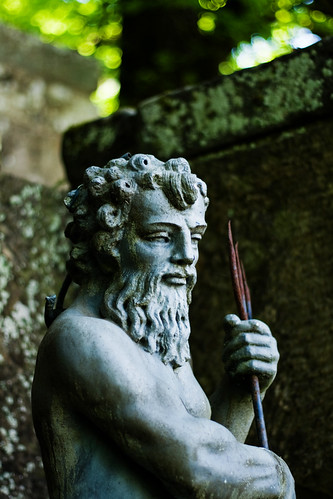
The thirty-third prompt is Neptune.

Neptune

All photo prompts are my own photography - you can find more of it on Flickr. You can also buy my prints from Deviantart. 20% of all proceeds go to charity - the other 80% go towards my PhD fees!

Friday, 13 May 2011

Friday Flash - Something Blue

Thanks to the maintenance outage that left Blogger down, I put this week's Friday Flash, Something Blue, over on my secondary blog - my mild OCD didn't want me to miss a Friday posting.

Normally I use my Cultural Carnival to discuss films or exhibitions, but this week it's hosting my flash. With any luck, things will be back to normal as of today! In addition, I'll be posting a "Making Of" entry on Tuesday discussing today's flash.

However, due to a peculiarity of Wordpress, I couldn't get the Audioboo box to load properly, so feel free to use the player below if you'd like to hear me narrate this week's flash.

Listen!

Tuesday, 10 May 2011

[Book Review] Must Love Dragons

If you say "elves" and "dragons" in the same breath as "fantasy", most people will think Tolkien, or something along those lines. Well who says fantasy has to be so po-faced and formulaic? Why can't it be...fun? Thankfully Monica Marier must have been thinking the same thing when she wrote Must Love Dragons.

Must Love Dragons tells the story of Linus Weedwhacker, a half-elf Ranger married to a shapeshifting dragon. He's given up his job to look after the kids while his wife runs a successful jewellery store - already very progressive for a genre in which most women are relegated to damsels, scheming queens or evil witches. When his wife falls pregnant again, she goes off to stay with her bad-tempered reptilian mother, and Linus goes back to work as a Ranger. Is it easy? No! There again, there would be no fun in it if it was.

Linus must team up with an enthusiastic young elf named Morfindel, and elven siblings Wendria and Bart to rid a village of a nearby infestation. Wendria is an academic but useless in the field, Bart has issues with authority, and Morfindel is...well, he's Morfindel, and absolutely lovable despite being utterly clueless. Linus is forced to play Dad while keeping them, and himself, out of trouble. Clearly the job of a Ranger is fraught with peril, involving a spot of bother with frost dragons, food poisoning and even political shenanigans.

Must Love Dragons is no kiddie quest story, with Linus appearing more as a 'John McClane in Middle Earth' character. In fact, the one thing missing from the book is a "Yippee-kai-ay!" Anyone who has ever encountered even a smidgen of bureaucratic nonsense in the workplace will surely sympathise with the various predicaments in which he finds himself, and the fact that he is so curmudgeonly just makes him so much more appealing as a hero. In fact, he's more like Snake Plisskin. He just wants to do the job and go home, and can everyone just leave him alone when he's finished?

The dialogue is sparky, and more than one passage had me chuckling. The action scenes crack along at an impressive rate, and the pacing makes this a real page-turner. Linus is a likeable protagonist, although he's occasionally upstaged by the earnest Morfindel. Must Love Dragons scores in that it is so heavily rooted in fantasy mores (musty village shops, elves, magic, dragons etc.) yet happily up-ends the whole lot to bring a touch of humour and humanity to an occasionally staid genre. Anyone for a spot of comedy-fantasy?

You can buy Must Love Dragons from Lulu or Amazon.

Monica Marier is a caffeinated writer, artist, mother and eccentric. On weekdays, she's busy working on her books, recording audio files, and composing serials and short stories for her blog. On weekends she's a co-founder of Tangent Artists, a webcomic company where she writes and does art for 3 comic series.

Her book Must Love Dragons is now on-sale through Lulu, Amazon, and upon request at Barnes & Noble. The sequel Runs in Good Condition is now available for pre-order through Hunt Press. Her serial, Madame Bluestocking’s Pennyhorrid is now running in the e-zine Dr. Fantastique’s Show of Wonders.

Monday, 9 May 2011

Photo Prompt 32

Latest prompt, ready and waiting.

If you want to use the prompt, all I ask is that you include a link to this entry and a credit to me for the photograph, and that you post a link to your story in the comments box below so I can see what you've come up with! If you don't comment on this entry, then I can't comment on your story.

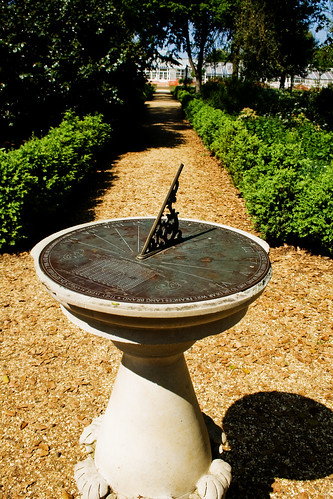
The thirty-second prompt is Sun Dial.

Sun Dial

All photo prompts are my own photography - you can find more of it on Flickr. You can also buy my prints from Deviantart. 20% of all proceeds go to charity - the other 80% go towards my PhD fees!

Saturday, 7 May 2011

[Book Review] From Dark Places

It seems like many months ago indeed that I stumbled across a blog by an English writer, whose work impressed me enough to find her on Twitter and begin an acquaintance. Since then, we've become (I hope!) friends, and Emma Newman has become one of my very favourite writers. Emma was really one of the first writers I interacted with on Twitter, so if it wasn't for her, there are a lot of writers I know now who I might otherwise never have met! She writes flash fiction as part of the #FridayFlash community, and she's currently promoting the e-book release of her first novel, 20 Years Later. However, it's her current release that interests me here, since I spent this afternoon at its London launch.

The short story is a splendid thing indeed, a snapshot into a time and place that we can visit with the writer as our guide. More fulfilling on a lunchbreak or while waiting for the bus than the gossip columns of a glossy magazine, the short story has become a bit of an artform. So much so that I've been looking forward to the official launch of Emma's anthology, From Dark Places, for a while.

Now, I already own the original e-book release that Emma did some time ago, and I've read many of the stories as a member of her Short Story Club (more on that later). However, the anthology was picked up, expanded, and polished by Jodi Cleghorn of eMergent Publishing, the Anglo-Australian independent publishing company behind the Chinese Whisperings and Literary Mixtapes projects, as well as 100 Stories for Queensland.

From Dark Places comprises twenty five stories of varying lengths, exploring a myriad of themes and ideas, yet always centred upon the very real dilemmas and problems faced by the characters. As the blurb says, "Abby finds a creative solution to her father’s problems. Ben makes a pact with the Devil for a new Mum. Katie is pursued by unrelenting voices. John just found his colleague’s hand in a strange girl’s lap. Jarvis is falling apart on his wedding day. Rosalind comes face-to-face with her number one fan. And that is just the beginning." They're dark and chilling, yet altogether human. Stories might deal with zombie invasions, angels and demons, or simply the fallout from a relationship gone awry, and yet it is the people at the centre of the stories that binds them together.

Emma also does audio work, so it was a real pleasure to hear her read aloud four of the stories - The Victim, The Letter, The Straw and In the Bag. The latter in particular is an impressive tale that encompasses the quest for eternal youth, celebrity stalkers and zombies. You can't say that of many stories. My own personal favourites in the volume are probably The Art of Desire, in which a little girl discovers a special artistic talent, Shedding, which is a wonderful little story of the true depths of understanding, Idolised, a powerful story about the dangerous reaches of belief, and the title story, From Dark Places. I award the anthology five blunt pencils out of five!

You can order a signed copy here, or you can buy the e-book for £2.99. You can read the first two stories here. If you like, you can follow Emma on Twitter @EmApocalyptic and you can "like" the book on Facebook.

Many of the stories in the anthology started life as stories sent to Emma's Short Story Club - members send prompts every month, and Emma chooses her favourite and writes the story. The winner gets to see it first, before it's sent to the rest of the members. If you want to get to read brand new and exclusive dark fiction, you can sign up for free here. In fact, my own prompt went on to inspire The Victim, included in From Dark Places, so I highly recommend signing up!